

RNA Therapy May Help Preserve Muscle During GLP-1 Weight Loss
In mice, adding the therapy to semaglutide led to greater loss of weight and fat while preserving more lean mass
GLP-1 drugs have revolutionized obesity treatment, but they can lead people to lose muscle mass along with fat. And when patients stop treatment, they often regain their weight — primarily as fat.
A new Northwestern University study published in Proceedings of the National Academy of Sciences offers a potential solution: an experimental RNA therapy that induces the body to burn calories, thereby enhancing the benefits of GLP-1s.
The study authors say their findings mark the first demonstration that an RNA therapy can turn on thermogenesis, when the body burns calories to produce heat. To achieve this, the experimental treatment essentially reprogrammed white fat, which stores energy, into beige fat, which helps burn it.
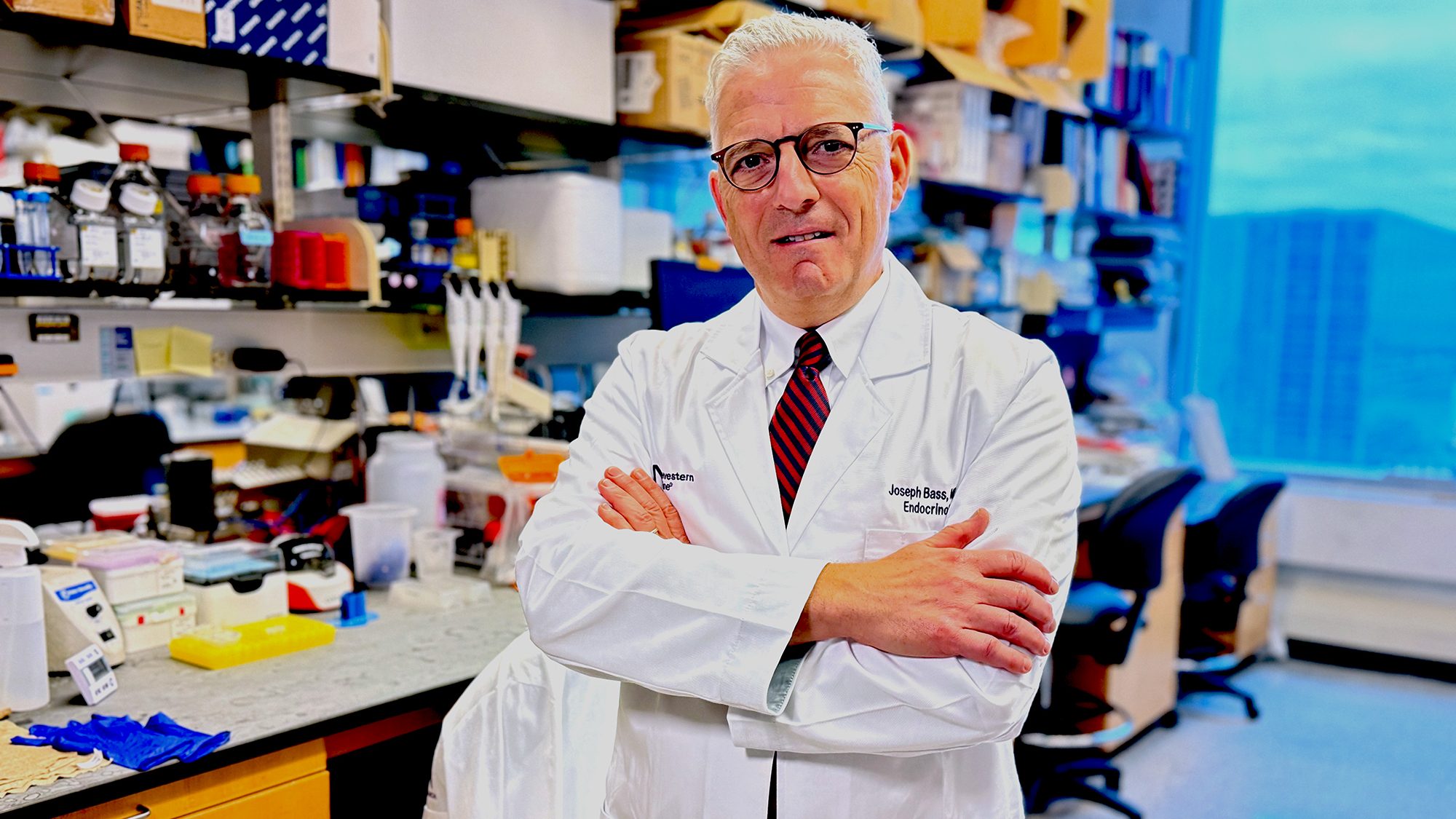
“We have identified, for the first time, an RNA therapy that promotes thermogenesis and, when combined with the GLP-1 drug semaglutide, helps preserve lean muscle mass,” said study senior author Joseph Bass, MD, PhD, director of the Center for Diabetes and Metabolism and a Northwestern Medicine physician.
Findings
First, Bass and his team tested the RNA therapy, on its own, in mice eating a standard diet and a high-fat diet. Then, encouraged by positive results, they tested whether the therapy could be combined with semaglutide to enhance the effects of the GLP-1 drug. Throughout the experiments, the scientists tracked body weight and fat, lean mass, energy expenditure, blood sugar and other measures of metabolic health, including insulin sensitivity.
The new therapy, developed at Northwestern, uses a small strand of RNA to silence a gene called ZFP423, which acts as a brake on white fat’s ability to become energy-burning beige fat.
At first, even in mice fed a normal diet, the therapy “tremendously” improved glucose tolerance while reducing body fat, Bass said, adding he found it “amazing” that it reduced fat tissue without causing any muscle loss, as well.
Ultimately, the most exciting results came from the final combination experiment. Bass and his team found that combining their therapy with semaglutide led to greater loss of weight and fat than semaglutide alone while preserving more lean mass. Mice receiving both treatments lost just 5.5 percent of their lean mass, compared with about 10 percent for those receiving semaglutide alone.
The combination also resulted in less body fat at the end of treatment: 4 grams, compared with nearly 8 grams with semaglutide alone. The combined treatment also improved glucose tolerance and other measures of metabolic health.
A years-long journey to the breakthrough
Bass, who is also the Charles F. Kettering Professor of Endocrinology and Metabolism and Chief of Endocrinology, Metabolism and Molecular Medicine in the Department of Medicine, said this work started years ago with a question a former member of his lab was trying to answer: How can eating the same number of calories at different times of day lead to different amounts of weight gain?
Chelsea Hepler, PhD, now at the University of Michigan, led the research addressing that question and identified a link between the body’s internal clock and its ability to turn white fat into beige fat. That work built on research by Rana Gupta, at Duke University, who had identified how the gene ZFP423 acted as a brake in the fat “beiging” process.
The next question was whether it was possible to release that brake with a drug candidate — something Bass and his team ultimately managed to do with the help of Ionis Pharmaceuticals, a company specializing in RNA-based therapies.
Next steps
Bass said his team is now working on testing similar RNA therapies in human cells.
Northwestern University has filed a provisional patent application related to the experimental RNA therapy described in this release. Bass and study first author Anneke Thorne are listed as inventors.
Other Northwestern study contributors include first author Anneke Thorne and co-authors Nathan Waldeck; Jesse Rose, PhD; Marisa Stachowski, PhD; Hannah Guak, PhD; Alexander Keeble, PhD; Britta Kuusik; Ella Simon; Biliana Marcheva, PhD; Joseph Mastroni; Pei Zhu, PhD, research assistant professor of Biochemistry and Molecular Genetics; Yumiko Kobayashi; Nicholas Conley, PhD; Andrew Cohen; Yasuhiro Omura; Chiaki Omura; Weimin Song, MD; Kathryn Ramsey, PhD , research assistant professor of Medicine in the Division of Endocrinology, Metabolism and Molecular Medicine; Dr. Grant Barish, MD, the Martha Leland Sherwin Professor of Medicine in the Division of Endocrinology, Metabolism and Molecular Medicine; Lisa Beutler, MD, PhD, assistant professor of Medicine in the Division of Endocrinology, Metabolism and Molecular Medicine; Clara Peek, PhD, assistant professor of Biochemistry and Molecular Genetics; and Dr. Elizabeth McNally, MD, PhD, the Elizabeth J. Ward Professor of Genetic Medicine and director of the Center for Genetic Medicine.
The study is titled “An RNA thermogenic therapy to preserve lean mass and enhance metabolic health during GLP-1 weight loss.” It was supported in part by the National Institutes of Health (grants R01DK090625, R01DK132647, P30DK020595, R01DK127800, R01DK113011, R01DK142852, R01AG065988, P01AG011412 and T32HL007909).
Legal Disclaimer:
EIN Presswire provides this news content "as is" without warranty of any kind. We do not accept any responsibility or liability for the accuracy, content, images, videos, licenses, completeness, legality, or reliability of the information contained in this article. If you have any complaints or copyright issues related to this article, kindly contact the author above.
